





Many of you probably struggle with interpersonal relationships. Why do we sometimes act strangely when interacting with others? We often do the opposite of what we know is ideal behavior. We end up doing things we know we shouldn't, even though we're often aware of it. Yet, we still do it.
It's not just problematic actions; we can also get caught up in negative emotions. Why does this happen? Actually, looking at the concept of “attachment” helps unlock this mystery. Trauma also plays a role in the background of attachment (attachment disorder) forming poorly.
This time, wanting many people to understand this, a licensed psychologist has compiled information about attachment (attachment disorder).
Please take a look if you're interested.
<Created 2025.9.26/Last Updated 2025.9.26>
※ When using content from this site (e.g., through reprinting), please kindly cite this site as the source or provide a link.
 |
Author of this ArticleIchitaro Miki Licensed Psychologist Graduated from Osaka University; Completed Master's Program at Osaka University Graduate School Engaged in psychological clinical practice for over 20 years. Specializes in trauma and attachment disorders that cause various struggles and difficulties in life. Author of books including “Developmental Trauma: The True Nature of ‘Difficulty in Life’” (cumulative sales approx. 40,000 copies), numerous TV appearances, drama production collaboration/supervision, web media, and magazine features. |
|---|
Medical Supervision for This ArticleDr. Keiro Iijima (Psychosomatic Medicine, etc.) Not only a specialist in psychosomatic medicine, but also a clinical psychologist, Kampo physician, and general practitioner, with expertise across these fields. He specializes particularly in treating somatic symptom disorder and autonomic imbalance. View full profile here |
・Certified psychologists provide descriptions, explanations, and key points based on years of clinical experience and client experiences (particularly from the perspectives of attachment and trauma therapy).
・References are drawn from specialized literature and objective data to the best of our knowledge.
・We strive to incorporate the latest research findings whenever possible.
・ In the latest diagnostic criteria (DSM), to prevent prejudice and misunderstanding, disorder names have been changed, specifically replacing “disorder” with “syndrome.” However, since the old names are still more familiar to the general public and are often used in searches, the traditional terminology is retained for convenience.
・This article has been translated from the original Japanese using AI. Therefore, it may contain unnatural translations, particularly for specialized terms.
Table of Contents
・What is Attachment?
・The Mechanism of Attachment
・The Three Behavioral Systems Related to Attachment
・What is Attachment Disorder? ~ Causing Various Problems
・Attachment Patterns, Styles ~ Four Categories
・What's Needed to Overcome Attachment Disorders
→See related articles here.
・Attachment Styles / Types and Characteristics of Attachment Disorders: Diagnosis and Self-Check
・How to Heal Adult Attachment Disorder: 5 Essential Points
Attachment is one of the most crucial concepts indispensable in contemporary clinical psychology (It is widely applied in fields such as education and management). Supported by a vast body of research and evidence, it is easily applied and developed in clinical practice, greatly aiding in assessment and resolution. For individuals themselves, it offers multifaceted insights into why their difficulties or struggles arise and how they might be resolved. Behind struggles and difficulties, attachment issues are almost always lurking. For example, in recent years, even phenomena like problematic developmental disorders do not inherently cause issues; they only become “problems” when multiplied by attachment anxiety. If attachment is secure, developmental unevenness can instead manifest as the individual's unique qualities and charm. How to restore attachment (a sense of safety and security)? This is the core of modern clinical psychology and counseling.
What is Attachment?
Attachment refers to the emotional bond formed with a specific other person.
While attachment itself can form toward various people (or things, events, animals, etc.), the “attachment” in attachment disorder refers to the bond a child unilaterally forms with a specific caregiver to ensure survival and safety.
It is an innate quality where, when facing actual or potential danger or anxiety, an individual seeks proximity to a specific person to alleviate distress and gain a sense of security.
This is not a psychological trait; it is observed in non-human animals as well and should be considered an instinct acquired through the evolutionary process.
The Mechanism of Attachment
・A biological mechanism predating the origin of humankind
Attachment is not merely a psychological mechanism; it is a biological phenomenon, a mechanism observed even in non-human animals like rats.
It is thought that forming attachments provides a survival advantage for organisms.
・In humans, attachment formation peaks between 6 months and 1.5 years of age, influencing subsequent social interactions
In humans, attachment formation peaks between 6 months and 1.5 years of age (though this varies individually and can extend to 2 or 3 years).
Bowlby, who established attachment theory, stated:
“An unwanted child not only feels ‘I am not wanted by my parents,’ but also comes to believe that they are fundamentally unworthy of being wanted—that ‘I am unwanted by anyone.’ Conversely, a child loved by their parents grows up not only with confidence in their parents' love, but also with the conviction that they are loved by everyone else.”
He stated, “Adult personality is regarded as the product of interactions with significant individuals during immature periods, particularly interactions with attachment figures.”
This is considered the foundation for subsequent personality and social engagement.
・Attachment forms around a specific object (person)
Attachment forms around a specific person. Selecting a specific person to form attachment with is called “monotropy.” Monotropy does not mean having attachment only to a single person. It is understood that attachment is also formed toward other family members besides the mother, such as childcare providers. Within this, selecting a specific person indicates that attachment objects are prioritized and form a hierarchy.
Attachment figures change throughout life, such as lovers or spouses. The attachment formed initially with a specific caregiver is considered particularly important because it serves as a model when attachment changes or renews later in life.
・The Attachment Formed Within the Mind ~ “Internal Working Model”
While infants require the physical presence of their attachment figure for attachment stability, after age three or four, they begin to internalize the presence of their attachment figure. That is, even when the caregiver is not physically present, the child can imagine their presence and what reunion will be like. This internal certainty and predictability about the relationship with the attachment figure is called the “internal working model.” The internal working model is like a mental model (a secure base) related to various things. It forms an internal model not only about the relationship with the caregiver but also about oneself as a self-image.
The key to secure attachment lies in how well the child internalizes the sense of being accepted and loved by the attachment figure—that they are a person worthy of love.
Furthermore, as children grow, their internal working model “diversifies” to handle various situations. However, if past traumatic experiences or resentment toward inadequate caregiving are strong, this diversification may not occur flexibly, making social adaptation difficult.
・Group childcare lacking consistency and individualization requires caution
What is crucial is the “consistency, continuity, and individualization of the relationship” from a specific attachment figure. Therefore, group childcare lacking consistency and individuality, such as the approach attempted in Israel's kibbutzim, is known to destabilize attachment.
Three Behavioral Systems Related to Attachment
・The Attachment Behavioral System, the Fear/Alert System, and the Exploration Behavioral Model
Bowlby posits that human behavior is governed by various behavioral systems. He specifically highlights three systems as particularly relevant to attachment: the Attachment Behavioral System, the Fear/Alert System, and the Exploration Behavioral Model.
“Attachment Behavioral System”: Maintains survival under the protection of caregivers. Forms around the target of a specific person by about 18 months of age.
“Fear/Alert System”: Removes or avoids objects of fear. “Exploration Behavioral Model”: Learns about the environment independently, enhances coping abilities, and acquires skills for independence. These three systems interact with each other to regulate a child's behavior.
For example, a young child uses their parent's presence as a source of psychological security (“Attachment Behavioral System”) while interacting with unfamiliar adults or children (“Exploration Behavioral Model”). If they receive an unfamiliar response or encounter a difficult person, they become frightened and start crying (“Fear/Alert System”), returning to their mother to regain security (the “attachment behavioral system”).
The “attachment behavioral system” truly functions as a “safe base,” while the “fear/alert system” acts as a “sensor and alarm.” The “exploration behavioral model” represents “actions toward independence and learning.” A stable balance among these three systems fosters the formation of “secure attachment.” alert system“ acts as a ”sensor, alarm,“ and the ”exploration behavioral model“ represents ”actions and learning toward independence.“ When these three are well-balanced, ”secure attachment" is formed.
・Dysfunction Caused by an Unstable Caregiving Environment
However, in an inappropriate and unstable caregiving environment, these three become unbalanced, leading to dysfunction.
Bowlby states that persistent rejection or neglect by caregivers deactivates all behavioral models related to attachment (the “attachment-exploration-fear/vigilance” behavioral system). In this state, the child defensively blocks all attachment-related information. This manifests as ignoring or showing indifference even upon reunion with the caregiver. It is thought to prevent seeking the mother only to be rejected again, thereby avoiding renewed distress.
Attachment serves as a model for human relationships while also providing psychological security during crises or times of exhaustion. For children to “learn,” they need appropriate models and support during exploratory behavior. Without these, “learning” cannot occur properly.
It's akin to a novice climber attempting to summit a major winter peak without establishing a base camp. They risk getting lost, and even if they return safely, they could suffer serious injury. The mountain (society) becomes not a fulfilling challenge or a safe place that accepts them, but a terrifying, demonic peak. They become perpetually timid and display unstable behavior.
Without a secure base, they become easily deceived and controlled by others. They fall into anxiety and confusion, leading them to act even more strangely.
What is Attachment Disorder? ~ Causing Various Problems
What is Attachment Disorder (Insecure Attachment)?
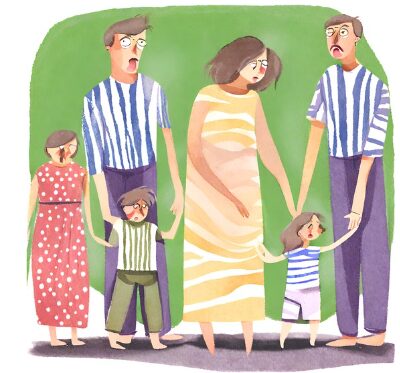
During the period when attachment forms, if the attachment figure is unclear, only unstable affection is received, or abuse occurs, stable attachment cannot develop. When only unstable attachment is experienced, interactions with society inevitably become unnatural. This is termed “insecure attachment,” and when it causes significant impairment, it is called “attachment disorder.” Approximately one-third of the population is considered to have insecure attachment to varying degrees.
・Intergenerational Transmission of Insecure Attachment
Research shows attachment styles influence each other across generations. For example, attachment styles match between parent and child in 60-70% of cases, and studies indicate significant predictability even across three generations: grandmother-mother-child. However, it is important to note that intergenerational transmission is not inevitable. Factors beyond the rearing environment, such as socioeconomic conditions, experiences gained by caregivers as they mature, and the social context of the era, also play a role.
Diagnostic Classification of Attachment Disorders
The Diagnostic and Statistical Manual of Mental Disorders, Fourth Edition, Text Revision (DSM-IV-TR) (Ikaisha) defines a state where the relationship with an attachment figure is impaired due to factors like abuse or neglect as “Reactive Attachment Disorder”. Within this, the type that does not form attachments with anyone was referred to as “Inhibited type of Reactive Attachment Disorder,” and the type that bonds indiscriminately is called “Disinhibited Social Engagement Disorder.” ※Typically, “Reactive Attachment Disorder” is only diagnosed in quite severe cases resulting from abuse or neglect. Therefore, it is a narrower definition than the state commonly referred to as “attachment disorder.”
The latest DSM-5-TR Diagnostic and Statistical Manual of Mental Disorders (Ishiyaku Publishers) only includes “Reactive Attachment Disorder”.
Even if diagnostic criteria are not met, if issues in early childhood caregiving are suspected through interviews, relatively mild cases are termed “insecure attachment”, while states causing significant impairment in daily life are termed “Attachment disorder”.
・Adaptive Strategies to Compensate for Insecure Attachment
When placed in an insecure attachment state, children around ages 3 or 4 begin attempting to control their parents and environment. Two representative strategies exist.
The first is called the “punitive type”, where the child tries to get their way by punishing or rejecting the parent.
The second is called the “appeasing type” " where they try to control their parent's mood or actions by becoming their confidant or supporter. Both are unnatural ways of relating. The punitive type is an adaptive strategy based on controlling the other person, not on empathetic engagement.
The appeasement style fosters a personality prone to excessive accommodation, compulsive caregiving, or over-dependence. It may also lead to learning to attract attention through lies or acting, ultimately resulting in distorted interaction patterns rather than genuine engagement.
・Problems and Symptoms Caused by Insecure Attachment (Attachment Disorder)
What happens when attachment becomes insecure? Various difficulties arise in navigating social life. The main issues include the following:
・Interpersonal relationships and communication become unstable upon entering society.
・Problems with identity and adaptation arise, making life feel difficult.
・Stress tolerance and coping abilities decrease.
・Symptoms very similar to developmental disorders or ADHD become apparent.
・Intelligence declines (an average IQ difference of over 10 points occurs between stable and unstable types).
・Cognitive functions (auditory response, spatial integration ability, problem-solving skills, etc.) deteriorate.
・Increased susceptibility to depression and personality disorders in adulthood.
・Increased vulnerability to addiction or self-harm to cope with life difficulties.
・Difficulty engaging in sexual activity and achieving satisfaction.
・Contributes to distorted interpersonal relationships.
etc.
・Trauma and Attachment
Attachment and trauma are concepts originally established separately. Therefore, detailed research is needed on their mutual influence, but it is undeniable that trauma (traumatic experiences) significantly impacts attachment.
Trauma refers to unjust memories that hinder the formation of healthy attachment. It causes problems such as hyperactivity, overadaptation, hypervigilance, dissociation, and hyperarousal. In adults, unresolved trauma experiences and fixation may prevent the updating of the “internal working model,” thereby hindering the formation of secure attachment. Trauma can arise even without clearly major events like abuse. (Professor Kenichiro Okano refers to this as “relational stress.”)
What is Trauma (Developmental Trauma), PTSD/Complex PTSD? Causes and Symptoms
Attachment Patterns, Styles ~ Four Categories
Attachment patterns and styles are broadly classified into four categories. We will introduce each pattern. It's important to note that people are rarely neatly divided into one pattern; individuals often possess elements of multiple patterns.
*Those under 18 are referred to as having an “attachment pattern,” while those 18 and older are referred to as having an “attachment style.”
If you want to know your attachment style, you can take a simple assessment on the following page.
→See related articles here.
・Attachment Styles / Types and Characteristics of Attachment Disorders: Diagnosis and Self-Check
Avoidant Type
・Characteristics of the Avoidant Type
True to its name, the avoidant type has limited interaction with caregivers and does not use them as a secure base during exploratory behavior. They show no anxiety or resistance when caregivers leave and exhibit indifference or avoidant behavior upon reunion. This is attributed to parental involvement that is rejecting, avoidant, or controlling toward the child. Even as adults, they avoid intimacy and prefer distant interpersonal relationships. They do not find close relationships or emotional sharing comfortable. What the avoidant type values most is “not being tied down.” They prioritize self-reliance and independence, avoid causing trouble for others, and place great importance on personal responsibility.
→For more detailed information, please see here.
“Characteristics of the Avoidant Type”
Anxious Type
・Characteristics of the Anxious Type
As the name “Anxious Type” suggests, intense anxiety is a defining characteristic. In particular, the fear of abandonment is extremely strong. Anxiety is pronounced in all situations, and the child remains emotionally unstable even when with caregivers. Consequently, they rarely engage in exploratory behavior, even when caregivers are present. A defining trait is that even when seeking contact with caregivers, they resist it intensely.
They constantly monitor their surroundings, often trying to gauge others' moods, responding with excessive politeness, accommodating others, or even complying with unreasonable demands. Even the slightest hint of rejection from another person triggers intense anxiety that is difficult to shake off. They have low self-worth and perceive others as entities that will hurt or criticize them. They tend to be prone to bullying during childhood. They depend on someone close to them, relying on that person to validate their existence, thereby somehow maintaining their sense of identity.
→ For more detailed information, please see here.
“Characteristics of the Anxious Type”
Disorganized Type
・Characteristics of the Disorganized Type
The disorgainzed type tends to be highly unstable, a complex mix of the avoidant and anxious types. It is thought to arise more easily in cases of abuse or significantly unstable parents. Precisely because the parent's responses are chaotic, the child's communication also becomes chaotic.
One person feels anxious and wants to get along with others, but becomes stressed and hurt when intimacy develops. They tend to struggle with self-disclosure yet also have a strong desire to rely on others.
→For more detailed information, please see here.
“Characteristics of the Disorganized Type”
Secure Type
・Characteristics of the Secure Type
Before separation from caregivers, they use caregivers as a “secure base” for exploratory behavior and show resistance or anxiety when caregivers separate. However, upon reunion with caregivers, contact with them resolves the stress of separation and stabilizes their emotions.
They have stable bonds and naturally trust that those who love them will continue to do so forever. They can easily ask for help or seek advice. They interpret others' reactions positively, avoiding cynical interpretations or misunderstandings. They are also less affected by how others respond.
→For more detailed information, please see here.
“Characteristics of Secure Type”
What's Needed to Heal and Overcome Attachment Disorders
Attachment profoundly influences us, but attachment disorders can be overcome through later environments and approaches. To achieve this, several key points and necessary steps exist.
We summarize these points in the article below. Please take a look if you're interested.
・Attachment Styles / Types and Characteristics of Attachment Disorders: Diagnosis and Self-Check
・How to Heal Adult Attachment Disorder: 5 Essential Points
※When using content from this site (e.g., through reprinting), please kindly cite this site as the source or provide a link.
(References & Sources)
Junichi Shoji, Makiko Okuyama, Mari Kubota, “Attachment” (Akashi Shobo)
Mari Kubota, “Research on Attachment” (Kawashima Shoten)
Miyuki Kazui, Toshihiko Endo “Attachment: Bonds Across the Lifespan” (Minerva Shobo)
Miyuki Kazui, Toshihiko Endo “Attachment and Clinical Practice” (Minerva Shobo)
Takashi Okada, “Attachment Breakdown” (Kadokawa Sensho)
Takashi Okada, “Attachment Disorders” (Kobunsha)
Takashi Okada, “Overcoming Attachment Disorders” (Kobunsha)
Kazuhiro Takigawa, Ryuji Kobayashi, Toshiro Sugiyama, Shozo Aoki “The Science of Child Development: Attachment and Bonds”
“Child-Rearing Support and Clinical Psychology vol.9 September 2014: Attachment Theory and Clinical Psychology”
Keiko Takahashi, “The Structure of Bonds” (Kodansha Gendai Shinsho)
Shuko Aiko, “Can Attachment Disorders Be Cured?” (Kafu-sha)
Joji Kanda-bashi, “Notes on Psychoanalysis for Treatment” (Sogensha)